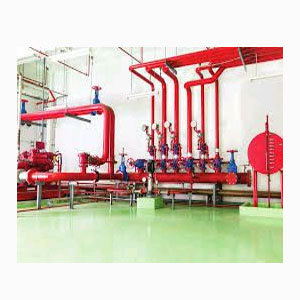
Fire Hydrants/fire systems are devices for extracting water from pipelines and water distribution systems. If you own a business, you likely have found out about the importance of fire hydrant system, yet do you know the contrast between a sprinkler system and a suppression system? How fire suppression system works or how to pick the right fire system for your foundation? You should know what fire systems are and which work best in various situations. Some fire systems can possibly cause more mischief than a real fire.
A fire suppression system is designed gathering of units that are worked to put off fires through the use of a substance.
Most normally, a fire system has underlying parts that recognise fires toward the early phases through hotness, smoke, and other signals. These are connected to a caution system that will alarm you when the fire has been distinguished and start ventures for activity to additionally smother the fire. The larger part of fire systems will naturally discharge the use of an outer substance to choke the fire. Nonetheless, some fire systems have a manual discharge.
CLEAN AGENT FIRE SUPPRESSION SYSTEMS
Clean Agent fire system is harmless to the ecosystem. It is insignificant, without water, and safe for the climate.
CARBON DIOXIDE FIRE SUPPRESSION SYSTEMS
Carbon Dioxide fire system uses the boring, scentless gas CO2 to quench fires. This system is exceptionally productive and decreases cost.
Café FIRE SUPPRESSION SYSTEMS
Café fire systems are intend to douse fire powered by oil and in a kitchen climate. They use wet synthetics in a fine fog to douse flames and proposition than dry synthetic substances.
Modern FIRE SUPPRESSION SYSTEMS
Modern plants are in high danger conditions and modern fire system intends to unhesitatingly check fires energised by synthetic compounds, fluid fills, or dangerous materials. Hence, modern fire system uses dry synthetic compounds.
Kinds of fire sprinkler system
WET SPRINKLER SYSTEMS
Wet line system are most well-known and most practical of the four fire sprinkler systems. Continually accused of water, wet sprinklers intend to release a predefined temperature, restricting and controlling the spread of fire.
Benefits
- Controls a fire to restrict harm
- Gives time to faculty clearing
- Gives security when a structure isn\’t involved (late night)
Restrictions
- Restricted to environment controlled spaces
- Ought not be use electrically stimulated gear
- Can cause unnecessary water harm if rashly released
- Water access decides if a pump is required
DRY SPRINKLER SYSTEMS
Dry line fire sprinklers are the arrangement of decision when the guide will be presented to temperatures under 40 degrees F. This system doesn\’t contain any water and is accused of gas (compacted air or nitrogen). At the point when a fire happens and produces sufficient hotness to deliver the sprinklers, the gas in the lines evades, bringing about a drop in gas pressure, which permits the dry valve to open and water to stream to the sprinklers.
Benefits
- Ensure regions that are not environment controlled
- Gaseous tension in pipe is managed for spills. System warning happens before the progression of water.
Limitations
- More mind boggling than wet line system
- Requires a constant gas supply
- Bigger system require more opportunity to get water to the enacted sprinkler head
- System size constraints because of the dispersal of water from the dry-pipe valve to the open sprinklers
- Measuring limits could require different systems.
PRE-ACTION SPRINKLER SYSTEMS
Pre-activity sprinkler systems are specific for use where unintentional initiation could harm high worth actual resources. Like a dry-pipe system, a pre-activity sprinkler system uses compressed air or nitrogen. The pre-activity system keeps down the water with an electrically worked valve, known as a pre-activity valve. Water won\’t stream into the system until the supplemental fire location system works, flagging the pre-activity valve to open.
Benefits
- Ideal for water touchy conditions
- Early identification and control of water discharge, shielding resources from water harm
- Intend to undesirable enactments
Limitations
- Requires a alarm identification system
- Greater expense to examine
- More system intricacy
Downpour SPRINKLER SYSTEMS
Like a pre-activity sprinkler system, a downpour system keeps down water by means of an electrically worked storm valve. In any case, dissimilar to pre-activity system, the sprinkler heads are dependably open, and the channel isn\’t compressed with air.
When the programmed location system initiates, the valve is opened and water discharges through every one of the heads all the while, delivering extensive measures of water.
Benefits
- Huge measures of water in a short measure of time
- Contains fire and cools encompassing region
- Can be joined with froth for combustible fluid flames
- The main sprinkler system can be physically actuated
Limits
- Requires alarm identification system
- Water is delivered through each head – whether or not required
- Commonly requires fire pump to give water supply
Where Deluge Sprinkler Systems Are Used Applications
- Airplane Hangars
- Fuel Loading Racks
- Power Plants
- Synthetic and Hydro-Carbon Storage
- Handling Facilities
Foam SPRINKLER SYSTEMS
The fluid flames can\’t be held back with water alone and require froth for extinguishment. Foam, blended in with water, covers the fluid that is ablaze, wiping out the oxygen supply.
Benefits
- Exceptionally viable on fluid flame
- Right away top off huge volumes with high extension foam
- More strong than water alone
- Numerous conveyance system: manual hose reel, wet sprinkler, pre-activity, or downpour
Limitations
- Froth concentrate has a time span of usability
- Should be tried every year
- Nearly greater expense to assess and keep up with
Hydrant System

Being one of the most established fires arrangement, an all around planned and a very much spread out Hydrant System shapes the foundation of the whole fires systems. It involves substantial above and underground channels with adornments. Outer and Fire Hydrant valves are given at each area. A fire hydrant is a line that permits water to move from a central pipe with the control of a valve to extinguish a fire. Fire Hydrant System is intended to battle fire of enormous extents, in all classes of dangers.
Kinds of Fire Hydrants
Dry barrel and wet barrel are the two kinds of Fire Hydrants. The wet barrel fire hydrant holds a steady water supply, while the dry barrel fire hydrant needs to have a valve delivery to give water access.
It is intended to give quick access to water if a fire breaks out. Fire Brigade Connections are introduced as independent systems which behave like fire hydrants, giving fire insurance which will be promptly accessible to firemen.
Fire hydrant comprises of line work associated to the water supply to give water to every single hydrant outlet and is expected to give water to the fire fighters. The water is released into the fire motor structure which is then pumped and showered over fire. Where the water supply isn\’t solid or deficient, hydrant pumps ought to be given to compress the fire mains.
Benefits of Fire Hydrant System
- Fire hydrant system is a successful method for choking the fire.
- The framework can battle the fire from distance because of its huge channel system.
- It has more entrance capacity when contrasted with other fire assurance system. In other words, high availability is its primary benefit.
- Hydrant valves are put at better places all through the structure, leaving no corner in the premises unprotected.
In fire hydrant system, huge amount of water is pumped out from the water tank with such a power and speed so it can reach to the fire impacted region. The limit of these water tanks relies upon the tallness and floor space of building like private, business or modern, and nature of risk also.
Such kind of measure and water supply gear is a necessity in certain structures where the odds of getting fire is higher. And when the parts are joined along with the wellspring of water, it turns into a weapon to battle with the shoot. The hydrant system totally relies upon the quality and proficiency of the parts used to plan the system.
This system requires investigations and tests at the standard time period to confirm that the system is in a legitimate state and is working appropriately.
Fire system maintenance
Maintenance involves checking and taking care of your fire security hardware, so it keeps on working to the extent that this would be possible and without requiring fixes. Contingent upon the kind of fire security gear, it very well may be cleaned, changed and greased up, or wear parts may be supplanted. An annual maintenance contract (AMC) is an agreement with a service provider for repair and maintenance of property used by your company. … Typically, AMCs include service support; however, you can add a comprehensive maintenance contract (CMC) that will cover IT support and replacement as well.
Why Dewan Project Tech
- Dewan Project tech ensures timely supply of goods and equipments and also factors of transit & Insurance
- Finding correct vendor who is fit for the needs in all commercial and technical field.
- We work in the professional nature to fulfil the supply on right time with to the quality factor as per firm norms.
- We keep secrecy to maintain our business ethics while dealing with the clients.
- Ensure the manufacturing department to get the supply without delay.
- taking control of the cost and process execution in line with multiple vendors.
- evaluating, selecting, auditing the vendor as per requirements of customer with various vendors of same specifications and maintaining the quality standards.
- We would get the suppliers on board at genuine price.