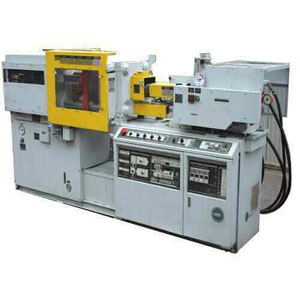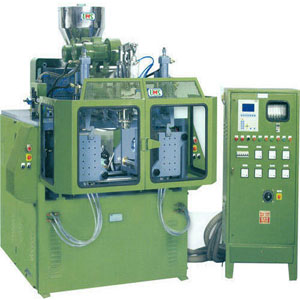
Blow Moulding Machine is a build interplay for framing and combining empty plastic parts. The course of blow moulding is generally used to deliver empty containers that range from item. For example, pop or water bottles, to profoundly designed site .ms. For example, fuel tanks or electrical walled in areas. Since a large number of these things are utilised for purchaser refreshments, creation is regularly coordinated for extremely high volumes of item. The innovation was affected from the glass blown holder industry. Which are presently industry rivals in the dispensable or recyclable container market. The blow moulding process is finished in two stages: manufacture of a beginning container of liquid plastic, called a parison, and expansion of the cylinder to the ideal last shape.
The historical backdrop of blow Moulding
The authority use of blow shaping started with the utilisation of celluloid and celluloid nitrate that were utilised to foster a set number of items as the celluloid is exceptionally combustible. The interaction was marketed with the main programmed blow shaping machine by the Plax Corporation during the 1930s. By 1939, this enterprise had a machine fit for creating 25,000 jugs each day, and in 1945, presented the utilisation of the as of late developed low-thickness polyethylene (LDPE) to crush bottles.
In 1953, the market for blow moulding items detonated with the appearance of high-thickness polyethylene (HDPE). The presentation of polyethylene terephthalate (PET) in the 1970s additionally permitted the advancement of more effective processes. The creation of other different pitches with time permitted a wide scope of other material properties to open up, the presence of bigger and more vigorous hardware, that lead to the development of a huge scope of modern and specialized applications
Types of Blow Moulding
The most well-known cycles of blow forming are extrusion blow moulding, injection blow shaping, and stretch forming.
Expulsion blow moulding (EBM)
Expulsion blow moulding is the interaction where:
- The thermoplastic material is dissolved and expelled (ousted) into the empty cylinder (parison),
- The form is shut,
- Packed air is blown into the parison filling the form,
- At last, subsequent to cooling and crystallisation, the item is eliminated.
The expulsion interaction is additionally partitioned into continuous and intermittent processes. In the constant interaction, the parison is expelled persistently and the form is opened and shut to finish the cycle. Then again, in the irregular interaction, the material is gathered by the extruder and afterward pushed to the bite the dust.
Expulsion is the most widely recognized strategy in blow shaping and is utilized in assembling items, for example, milk bottles, cleanser bottles, auto ducting, watering jars, and other modern parts. The fundamental benefits of this strategy are the minimal expense and quick creation rates, just as the capacity to deliver complex calculations. A portion of the impediments incorporate the simple creation of empty parts and the material\’s low strength. When utilized for creating wide neck bottles, turn managing is required
Infusion blow moulding (IBM)
Infusion blow moulding is the interaction where the material is liquefied and infused (constrained) into an unequivocally dimensioned bite the dust until it cools and hardens to the ideal item shape. The cycle comprises of three steps: injection, blowing, and ejection.
Infusion blow forming is chiefly used to create jugs, containers, and compartments in huge amounts. This technique is more uncommon because of the impediments on the creation rate and is ideally utilized for little items like those for clinical applications. Its primary benefit is the capacity to create precisely complex-shaped necks. In any case, it experiences the limitation to little containers creation just and low strength in the obstruction
Stretch Moulding
In stretch trim, the parison is framed likewise as the infusion blow shaping, however with the distinction that once moved to the blow form, it is warmed and extended descending by the center before expansion. The extending technique takes into account the utilization of expanded strength in the material.
Stretch trim is exceptionally profitable for low volumes and for permitting the form divider to be molded in rectangular and non-round shapes. However, the technique has limitations on bottle plans. It is utilized to deliver parts exposed to interior tensions or with high sturdiness requests, for example, soft drink bottles.
WHAT IS THE SINGLE-STAGE BLOW MOULDING PROCESS?
A solitary stage process acquires its name from the way that it creates preforms, stretches, and blows them on a similar machine prior to cooling. In this way, single stage PET blow shaping machines can additionally be said to utilize an immediate strategy. This degree of usefulness can be ascribed to the infusion shaping framework and blow forming station being incorporated into one machine. Moreover, the machine can either be a 3-station or 4-station framework.A 3-station single-stage machine has three stages which are infusion, stretch blow, and launch.It additionally utilizes inactive hotness which saves the expense of warming, thereby reducing 25% of heat in tooling.The 4-station, then again, contains these three phases and an extra warming stage.
PROCESSES INVOLVED IN THE SINGLE-STAGE METHOD
The change of the unrefined substances into a jug utilising the single-stage follows the systems laid out beneath:
1. Dehumidifying and drying of PET materials
2. Dissolving and infusing of the unrefined components into the preform form through the infusion spout
3. Cooling of the liquid material in the preform mould to 120 ° Celsius
4. Move of the hot preform mould to a jug form to start the stretch trim
Benefits OF SINGLE-STAGE BLOW MOULDING PROCESS
There are a few benefits of a solitary stage shaping cycle and they include:
- Minimal and adaptable
- Move ring is discretionary
- Makes flaw free containers
- More appropriate for low volumes
- Command over preform creation
- Command over string begin to line up with container\’s shape
- More affordable in contrast with two-stage machines
- Reasonable for blowing rectangular and non-round shapes
Weaknesses OF SINGLE-STAGE BLOW MOULDING PROCESS
The weaknesses of utilizing this technique include:
- Long process durations
- Long changeover times
- Limitation in the jug plan
- Divider dissemination might be lopsided
- Extraordinary ability is needed in dominating the two cycles and PET drying
- Wasteful blow station because of infusion station having more point of reference throughout process duration
WHAT IS A TWO-STAGE BLOW MOULDING PROCESS?
The strategy utilised in two-stage infusion stretch blow shaping machines includes two machines.These are the injection shaping system and stretch blow forming machine. Here, the plastic is shaped into a completely cooled preform in the principal machine prior to being transported to the subsequent machine.The preform will ordinarily include the neck of the container just as its string, and it tends to be offered to an outsider even before it is blown utilising the subsequent machine. When gotten by the last option, they are then unscrambled, warmed utilising infrared radiation, and adapted prior to embellishment.The need to cool the preform prior to warming and extending likewise gives this cycle its name, the \”cool preform technique\”.
PROCESSES INVOLVED IN THE TWO-STAGE METHOD
- Dehumidifying and drying of PET materials
- Infusing of liquid unrefined substances into the preform form by the infusion machine
- Cooling of liquid PET to room temperature
- Handling of preform by a completing machine
- Moving of the preform to warming stretch blow shaping machines
- Blowing high-pressure air into bottles with the utilisation of metal blow moulds
Benefits OF TWO-STAGE BLOW MOULDING PROCESS
A few benefits of the two-stage shaping interaction include:
- Adaptability
- Quick process durations
- Quick changeovers
- Less limitation to bottle plan
- The cycle can be halted at whenever
- Great divider dissemination for round bottles
- Preforms can be sold prior to being blown
- Handles high volumes of 1000 to 72,000 containers/hr
Detriments TWO-STAGE BLOWING MOULDING PROCESS
The detriments of this cycle include:
- High money to keep up with
- Floor space required is high
- Scratches might happen on bottles
- Expected harm to the preforms
Components Used for blow moulding
There is a wide cluster of natural substances that can be utilised for blow shaping. Blow shaping materials are ordinarily thermoplastics that don\’t effortlessly corrupt after warming.Blow shaping is broadly utilised in the production of plastic jugs which is the reason most unrefined substances have properties appropriate for such application.As of now, blow shaping is acquiring force in the transportation, development, and buyer merchandise enterprises.This makes designing plastics like polyamides and polycarbonates practical to be blown shaped too.
Polyethylene (PE)
Polyethylene is the most generally utilised blow forming material.It has numerous advantageous attributes like simple processability, durability, and adaptability which are held even at low temperatures, scent and poison free, fantastic clearness, great water boundary properties, great electrical protection properties, and minimal expense. It has two principle types: high-thickness polyethylene (HDPE), and low-thickness polyethylene (LDPE).
High-thickness Polyethylene (HDPE)
Among the sorts of polyethylene, HDPE is the more prevailing natural substance as far as portion of the overall industry. Its sub-atomic construction is straight with minimal stretching bringing about higher intermolecular powers. This invigorates HDPE its high explicit.
Low-thickness Polyethylene (LDPE)
LDPE has a fanned polymer chain that has powerless intermolecular powers. This outcomes in lower rigidity and boundary properties. By and by, it has preferable effect strength and versatility over HDPE.
Polyethylene Terephthalate (PET)
PET, explicitly biaxially situated PET, is known for its low penetrability to carbon dioxide. This makes the material attractive for creating bottles for carbonated drinks.The disadvantage of utilising PET, be that as it may, is its proclivity with water. It will in general retain water which makes handling troublesome as the sap should be dried before expulsion.
Polypropylene (PP)
Polypropylene is a polymer that can have a wide scope of properties that relies upon its atomic weight, morphology, glasslike design, added substances, and copolymerisation. It tends to be made into polymers with a serious level of crystallinity; in this way, higher rigidity and hardness which is practically identical to HDPE. Also, they can endure higher temperatures without loss of solidarity or debasement.The hindrances of utilising PP are its helplessness to UV corruption and oxidation.
Polyvinyl Chloride (PVC)
Polyvinyl Chloride is one more adaptable material that can be planned with various stabilizer\’s, plasticisers, sway modifiers, handling helps, and different added substances. It tends to be made into inflexible or adaptable plastics by changing how much plasticisers. Also, they offer preferable clearness over other flexible plastics like PP. Nonetheless, PVCs can deliver hurtful poisons, acids, and poisons during handling or debasement. Its intensifying fixings are presently being directed by FDA, EPA, and different associations.
Nylon or Polyamide (PA)
Polyamide is considered as a designing plastic portrayed by its high durability, high effect strength, protection from solvents, great scraped spot opposition, and can be altered to have high hotness obstruction.Just around 10% of PA creation volume is utilised in plastic shaping cycles.The normal uses of blow-shaped PA are car parts and gas tanks.
Polycarbonate (PC)
Polycarbonate is effortlessly handled by various trim techniques, with infusion embellishment and sheet expulsion being the most widely recognized. In blow shaping, its standard application is bottle creation.Polycarbonates are known for their high effect strength, heat obstruction, great electrical protection, straightforwardness, great water boundary properties, and innate fire hindering properties.
Copolyester
Copolyester are portrayed as having exceptionally high warm oxidation soundness, intrinsic fire opposition, synthetic latency, fantastic lucidity, and great mechanical properties.It tends to be formed into dainty walled compartments at high rates. Additionally, it has characteristic lubricity and non-stick properties making it feasible for trim.
Cyclic Olefin Copolymer (COC)
COC is a group of completely indistinct polymer pitches that are wanted in view of its tantamount properties with PVC without the adverse consequences. It is the most ideal for food bundling, medication containers, and vials creation as a result of its low water fume penetrability.The properties of COC can be adjusted by creating explicit mixes of polyolefins.A portion of the properties that can be adjusted are its versatility, straightforwardness, fume transmission rate, and coefficient of grinding.
Acrylonitrile Butadiene Styrene (ABS)
ABS is a typical plastic that is portrayed by having great hardness and unbending nature while having some level of strength. At the point when blow formed, they can have an excellent surface get done with making them appropriate for the assembling of customer products. Defensive coatings are generally applied because of their helpless protection from UV and just sufficient protection from most acids and salts.
Completely Automatic 4-6-8 Cavity Pet Bottle Blow Moulding Machine
Is reasonable for blowing any sort of Carbonated Beverage Bottle, Pure Water Bottle, Fruit Juice Beverage Bottle, Cosmetic Bottles, and other bundling bottles.It chips away at a high level microcomputer PLC control framework that guarantees stable execution and better productivity.
Conclusion
- Blow shaping is a sort of plastic framing process for making empty plastic items produced using thermoplastic materials.The interaction includes warming and swelling a plastic cylinder known as a parison or preform.
- Plastic blow forming started from the antiquated course of glass blowing.Both glass and plastic in their liquid state can be shaped effectively by presenting limited quantities of air inside the liquid material.
- Blow shaping is a genuinely direct cycle that incorporates dissolving, homogenising, expelling, forming (blowing), cooling, and discharge.
- There are two fundamental kinds of blow shaping: expulsion and infusion blow forming.They contrast as indicated by the technique for delivering the preform or parison.
Our Customers don\’t experience the tedious course of overseeing various sellers and timetables.One Blow Moulding Machine can deliver many sorts of items with different plans, cost-adequately.Dewan Project tech is a one-stop answer for your Blow Molding needs, amplifying your proficiency, and setting aside you cash!
Why Dewan Project Tech
- Dewan Project tech ensures timely supply of goods and equipments and also factors of transit & Insurance
- We can customise as per client needs.
- Finding correct vendor who is fit for the needs in all commercial and technical field.
- We work in the professional nature to fulfil the supply on right time with to the quality factor as per firm norms.
- We keep secrecy to maintain our business ethics while dealing with the clients.
- Ensure the manufacturing department to get the supply without delay.
- taking control of the cost and process execution in line with multiple vendors.
- evaluating, selecting, auditing the vendor as per requirements of customer with various vendors of same specifications and maintaining the quality standards.
- Having free trial and inspection with technical persons before installation to qualify as per the requirements and modifications to be done before installation if any changes takes place.
- Essentials of four R’s. At right place with right quality in right time on right price
- We would get the suppliers on board at genuine price.