Robots. There are many great robot request that you can send in a plastics organization. Indeed, the majority of the request that we notice somewhere else on this blog are similarly as appropriate to plastics as they are to some other industry.
Well, the following are 5 normal applications that use robots, for certain models.
1. Injection Moulding
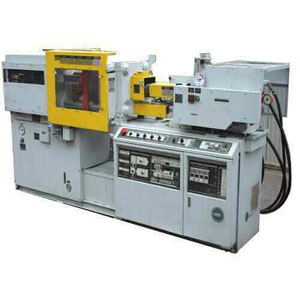
A typical undertaking for advanced mechanics is infusion forming. This includes infusion shaping machine, stacking the machine, and tidying up the workpieces.
One illustration of an infusion shaping robot is cell utilizes an ABB IRB 1600 to play out a progression of undertakings in the infusion forming process.
This clarifies how they are seeing a pattern towards more modest organizations conveying such automatic arrangements inside the plastics business.
2. Blow Moulding
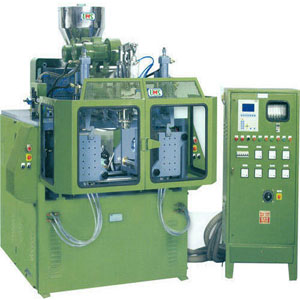
A connected application is blow forming. This cycle is utilized to make plastic jugs — in addition to other things — and robots are a decent choice for dealing with those jugs.
This shows a modern robot with a custom end effector being utilized to deal with large water bottles that have been framed in a blow forming machine. Such applications save human specialists from performing overwhelming difficult work for quite a long time, which saves them from monotonous strain wounds (RSI).
3. Plastic Welding
Robots are a solid choice for various sorts of welding, including spot welding and curve welding of metals. They are similarly fit to plastic welding processes and have been effectively conveyed in different business. This further develops the weld quality and consistency. Likewise with different sorts of automated welding, it can likewise decrease wastage.
4. Arranging
There are a lot of things to be arranged in a plastic business. Robots give a decent choice to reliably arrange items at high volume and don\’t have to occupy a lot of room.
5. Painting
Painting is an essential occupation for some plastic items. It has some particular necessities when done mechanically. For instance, for certain sorts of painting, you ought to guarantee that you have a robot that is resistant to blast on account of the combustible atomised paint. Therefore, there are devoted painting robots accessible available.
What is the use of automation in plastic industry?
The destiny of automation in plastics framing is to help and produce cost hold reserves. Robots accomplish these destinations by speeding up creation, reducing the work content, diminishing piece, and dealing with quality.
What plastic is used for robots?
Upon the robot\’s weight, and on the essential insurance from shock and impact, acrylic may be proper for low-stress fundamental parts. For instance, robot bodies. Polycarbonate is more grounded than acrylic, and PVC plastic is easy to-process. Acetal pitch, a planning plastic, is both thick and strong.
Utility of robots in plastic industry
There are a wide range of different applications for robots in the plastics business. Material taking care of: moving large and little plastic parts, which might be hot or delicate, without exhaustion. Machines: managing, deflashing, penetrating, degating. Material affidavit: showering paint, pitches, cements, pastes and stain.
How are robots used in business and industry?
Creating robots handle tasks like welding, get together and pick-and-spot exercises with more significant speed and capability than human workers may anytime might want to achieve. …Current robots moreover decline the risk of workplace incidents and assurance more over thing quality.
How do robots impact Businesses?
Robots are more accurate and powerful than individuals. Clinical, and current goofs can be almost killed with the use of robots. By using robots, business can see tremendous save reserves and monetarily changes to occupations that may take individuals days to wrap up. Robots can convey extraordinary things.
The benefits of Robotics in the Plastic Processing Industry
Robots have been around for a long time and gaining progress for makers as far as speed, effectiveness, and wellbeing. Over the most recent years, new discoveries on efficiency and designing developments have utilized mechanical technology much more famous and made robots strong accomplices at offices.
Cartesian or straight robots (shaft robots) have been used in the plastic business for a really long time. However, presently even six-hub robots are being used at a wide scale.
A portion of the main considerations for their expanded prominence is low expense of proprietorship and how easy to understand these machines have become. Shop floor faculty can now easily set-up and program the robots. With lower costs, even little and medium sized processors can use the automation wave and receive the rewards of the innovation.
Assuming you are thinking about mechanical technology with your handling office, the following are a couple of benefits that may assist you with your choice:
Higher Productivity, Lower Expenses
Robot process has been a help for the plastic handling area as it offers various advantages remembering a lift for efficiency, accuracy, expanded adaptability, and cost reserve funds. Robots can work relentless while offering high accuracy. Large processors have 15-30% increment in efficiency to embracing a mechanical robot process!
In addition, mechanisation prompts reserve funds in unrefined components. With regards to carbon fiber composite materials, this element turns out to be profoundly helpful as unrefined substance cost is amazingly high. The use of robots helps in saving work costs and diverts labor to situate where they can offer more benefit. The investment funds made on these expenses straightforwardly influences the main concern.
Remarkable Multi-Tasking Capabilities
Linear robots have been used in the business for the vast majority of the difficult work. Six-hub robots used to be moderately disliked as they were viewed as costly and muddled to work. In any case, with innovation, there has been an ascent in robots that are not difficult to program.
With regards to formed parts, it is unimaginable to launch a section from the shape. Therefore, six-pivot robots can without much of a stretch oversee shaped parts by turning and moving the part out of the form. Performing various tasks capacities permits these robots to do at least two positions without a moment\’s delay. For instance, while a section is being shot out from a shape, the machine can at the same time play out extra work.
Six-hub robots offer large upper hands by decrease in work expenses and supplanting gifted administrators.
Expanded Worker Safety
Robots offer various and optional advantages to clients. They can protect labours from risky conditions and complete the job needing to be done easily. Such robots can deal with explicit applications. They are sufficiently adaptable to finish a wide scope of part expulsion and situating necessities over the infusion forming machine\’s life cycle.
The execution of advanced mechanics in the plastic handling industry has decreased process durations, part quality and diminished expenses. It also helps in guaranteeing labour security by taking over possibly hazardous undertakings.
Kinds of robots used in plastic industry
3-Axis Robots | Top Entry Robots
Mechanical Automation Systems uses 3-pivot robots, also called top passage robots, for plastic automation machines and tasks requiring higher paces.
Run of the mill plastic automation for top section 3-hub robots include:
- Part picking and taking care of robot
- Embed stacking automation
- In-form improving (IMD)/In-shape naming (IML) mechanisation
- Arrange and stacking automation
- Bundling and palletising robot
- Review mechanisation
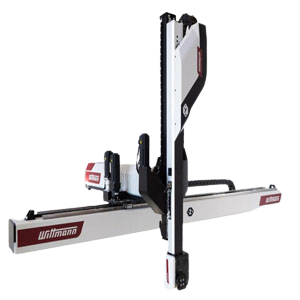
Top robots or 3-hub robots (also called direct robots, Cartesian robots, gantry robots or shaft robots), are the workhorses of plastic moulding automation. They have an upward Y pivot to venture into the space between the moulds. A Z hub used by the even bar to reach from a space over the shape to a point outside the machine. And a X hub that moves the upward arm in-accordance with the injection shaping machine to peel parts off the shape or place them outside the area. 3-pivot robots (top section robots) are easy to work and keep up with, and limit energy use.
In-Mold Decorating (IMD)/In-Mold Labeling (IML) Automation
Mechanical Automation Systems represents authority in automation of (IMD) and (IML) tasks used in plastic injection moulding from 15 to 6,000 tons.
- Top Entry/3-Axis Robots – Most traditional
- Side Entry Robots – Faster cycles
- 6-Axis Robots – Flexible mechanisation for upstream/downstream tasks
Advantages of Robotic Systems in (IMD) and (IML) robotisation for:
- Quicker and steady cycles
- Precise and repeatable adornment position
- Expanded wellbeing
- Less waste
6-Axis Robots | Articulated Robots
Mechanical Automation Systems uses 6-pivot robots, in robotisation on both level and vertical plastic machines for expanded adaptability in upstream and downstream tasks.
Run of the mill plastic automation for 6-hub robots include:
- Part picking and taking care of robot
- (IMD)/(IML) robot
- Embed stacking automation
- Over-moulding automation
- Get together cell robot
- Stacking and arranging automation
- Assessment mechanisation
- Other helper activities
6-hub robots take into consideration explained and development to any point inside the envelope:
- Rotates robot (at the foundation of the robot)
- Forward/back augmentation of robot\’s lower arm
- Raises/brings down robot\’s upper arm
- Rotates robot\’s upper arm (wrist roll)
- Raises/brings down wrist of robot\’s arm
- Rotates wrist of the robot\’s arm
Development is driven by engines. A control framework controls the power provided to each engine and exact development of the robot.
Advantages of Articulated robots, or 6-pivot robots, are simpler to adjust to large planes. Easy to work and keep up with. And handily for plastic infusion forming automation on different kinds and sizes of plastic infusion machines and for a wide scope of upstream and downstream request.
Cooperative Robots (Cobots)
Cooperative robots (cobots) used to robotise recently performed by people, including dreary errands that strain people, or undertakings including associating with other things.
These robots intend to work securely next to each other with humans without the demand for wary watching. Just as with other cobots, robots can be more useful than utilizing robots or humans alone.
These 6-pivot robots give answers for plastics producers addressing difficulties related with work deficiencies. And battling to fill tedious positions like bundling, palletising or layer pressing.
While some 6-pivot robots may not rival as far as speed and accuracy. They likewise enjoy the benefit of simplicity of programming. Plastic use robots (cobots) to expand efficiency, work on quality, lessen waste and address labor force deficiencies.
4-Axis SCARA Robots
4-Axis SCARA (Selective Compliant Assembly Robot Arm) robots furnish a round work envelope.
SCARA robots depend on a 4-pivot plan with movement like that of a human arm. The arm is inline in the X-Y heading yet unbending in the Z bearing – accordingly \”specific agreeable\” in (SCARA).
They have a little impression and can be based on a more limited size. Some SCARA robots offer rapid, weighty payload, high accuracy, enormous work envelopes with choices.
Run of the mill plastic robot applications for top section 4-pivot SCARA robots include:
- Embed stacking robot
- Stacking robot
- Bundling robot
- Review automation
This various types of robots used in various ways and in different industries.
Why Dewan Project Tech
- Dewan Project tech ensures timely supply of goods and equipments and also factors of transit & Insurance
- We can customise as per client needs.
- Finding correct vendor who fits for the needs in all commercial and technical field.
- We work in the professional nature to fulfil the supply on right time with to the quality factor as per firm norms.
- We keep secrecy to maintain our business ethics while dealing with the clients.
- Ensure the manufacturing department to get the supply without delay.
- taking control of the cost and process execution in line with multiple vendors.
- evaluating, selecting, auditing the vendor as per requirements of customer with various vendors of same specifications and maintaining the quality standards.
- Having free trial and inspection with technical persons before installation to qualify as per the requirements and modifications to be done before installation if any changes takes place.
- Essentials of four R’s. At right place with right quality in right time on right price
- We would get the suppliers on board at genuine price.